

Choosing outdoor lighting equipment is not simply about light output. The type of environment, installation height, size of the area, direction of light, and the amount of time the light remains on all affect the final choice. For this reason, a floodlight may be a suitable option for illuminating an industrial site, while a street light may perform better for a passageway or road.
Both floodlights and street lights are used to provide illumination in outdoor spaces, but their design and light distribution methods are not the same. Understanding these differences helps ensure that the right equipment is selected to illuminate the intended area properly without wasting light.
What Is a Floodlight and What Is It Used For?
A floodlight is one of the most commonly used lighting fixtures for creating broad or focused illumination in outdoor environments. These lights are generally used when a relatively large area needs to be illuminated from one or more specific points. Building yards, factory grounds, warehouses, parking lots, building facades, sports fields, and industrial environments are among the spaces where floodlights can be used.
How Should You Choose the Wattage of a Floodlight?
One common mistake is to base the selection solely on the wattage. Higher wattage generally means higher energy consumption, but factors such as luminous flux and the product’s luminous efficacy should also be considered when evaluating the actual amount of light produced.
For example, the lighting required for a small yard is not the same as that required for a large industrial site. The distance between the installation point and the ground, the angle of the light fixture, and the number of installation points also affect the amount of light required.
In some projects, using several floodlights with proper positioning can produce better results than installing a single extremely powerful light, because the light distribution will be more uniform.
How Is a Street Light Different from a Floodlight?
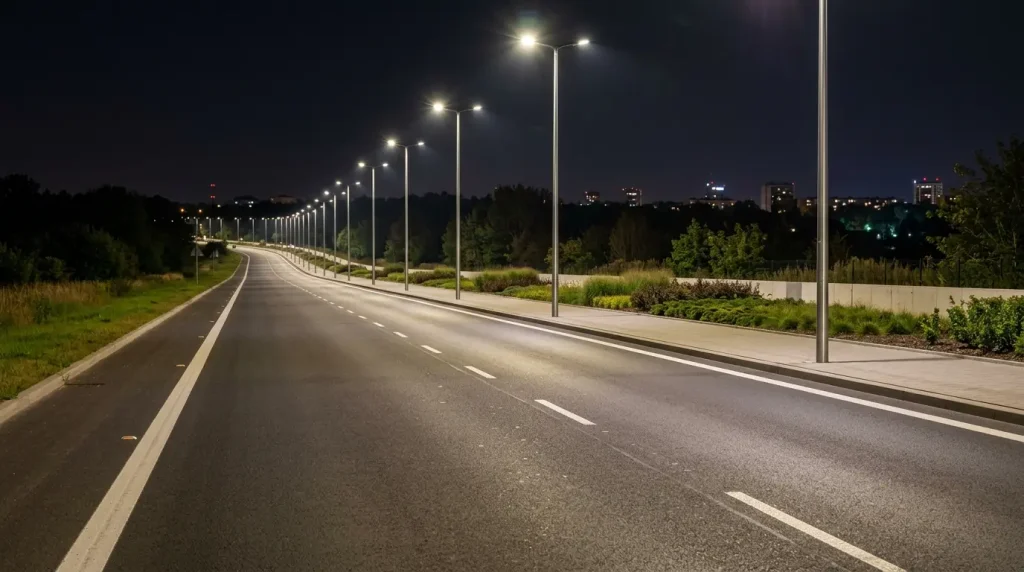
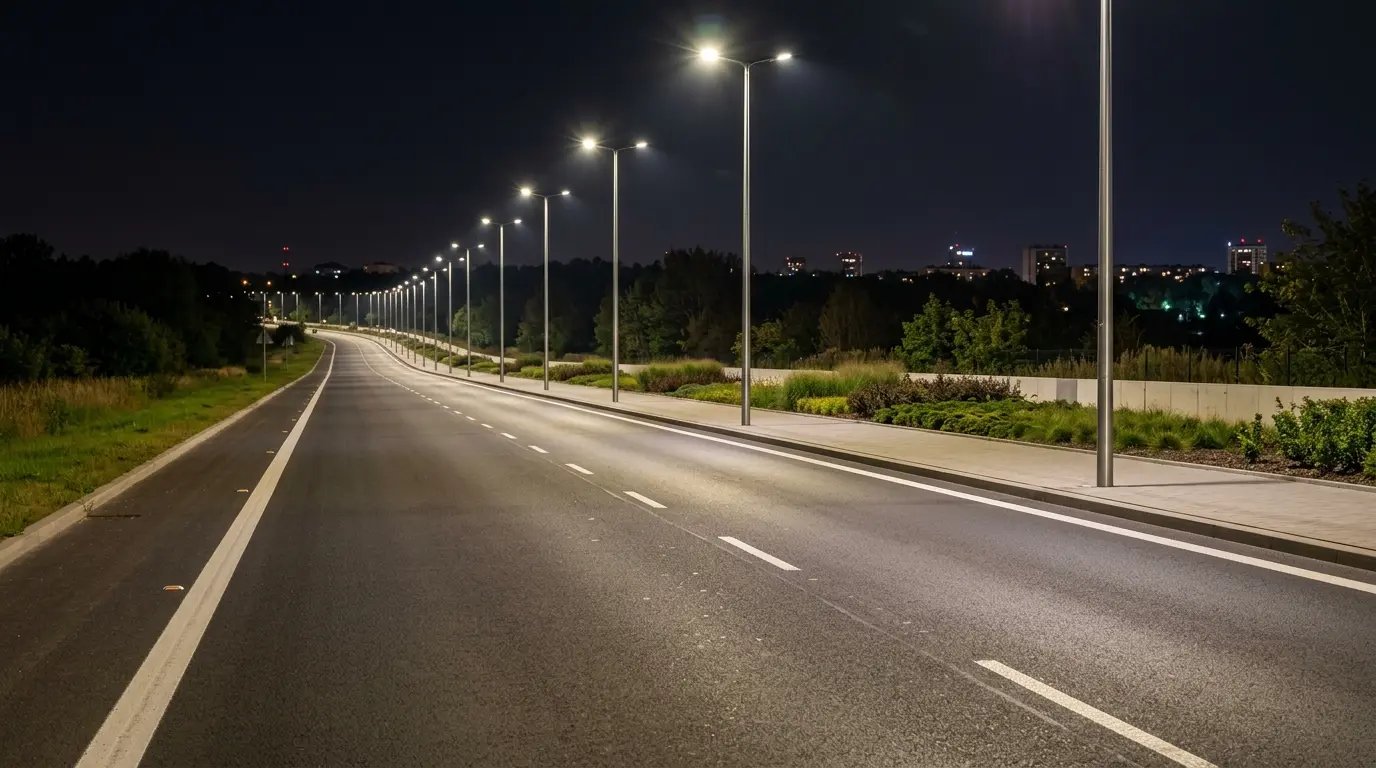
Street lights are specifically designed to illuminate roads, passageways, and elongated areas. The body design, installation method, and light distribution system of these products are generally optimized to illuminate road surfaces or travel routes.
On a road, the goal is not to distribute light in every direction. Most of the light should reach the surface of the road and cover the intended area with minimal light loss.
Applications of Street Lights
The use of street lights is not limited to urban roads. These products can also be used along internal roads within complexes, factory entrances, industrial parks, large parking areas, and access roads. The height of the light pole, distance between poles, width of the route, and required illumination level are factors that should be evaluated before selecting a product.
The Main Difference Between Floodlights and Street Lights
The main difference between these two types of lighting lies in how they direct and distribute light. Floodlights are generally used to project light from a specific point toward a defined area. Therefore, the ability to adjust their angle is important in many applications.
Street lights, on the other hand, are designed to create a specific lighting pattern across a route and are typically mounted on poles at a certain height. Therefore, it is not possible to simply decide which option is better based on wattage alone. The type of space should be determined first.
Is a Floodlight or Street Light Better for a Building’s Outdoor Area?
If the goal is to illuminate a yard, building entrance, the area in front of a warehouse, or a specific part of a property, a floodlight generally offers greater flexibility in directing the light.
In very large areas that include vehicle access routes, a combination of both types of lights may be used. Street lights can illuminate the main route, while floodlights can be used for entrances, work areas, or specific sections of the property.
Take Light Placement Seriously
Even choosing the right light fixture will not produce the desired result without proper placement. Installing a light at an unsuitable angle can create e